Ecommerce SEO for online stores
More of your products in front of people who are already searching to buy them.
We work on the parts of a store that decide where it ranks: collection pages, product pages, and the site problems that keep both of them off page one.
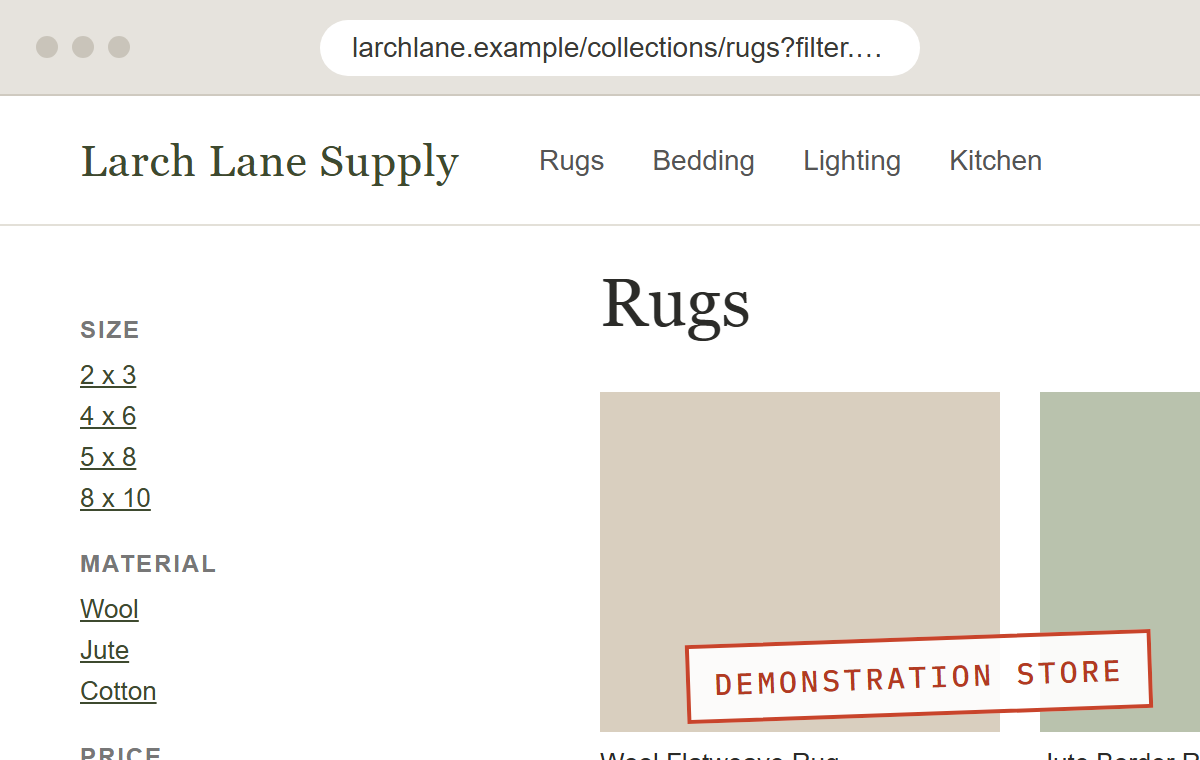
- Filter links make a new address for every combination
- No words above the products, so nothing tells Google what this page is for
Why good products sit on page three
Chances are, your store was built to sell: good photos, a clear basket, a quick checkout. It is quite likely nobody set it up for search at the same time. If they did, you are in a good spot. If they didn't, most of what is missing can be fixed without a rebuild. There are a few plain reasons a good store stays hard to find, and these are the five we look for first.
The same product at several addresses.
Some themes link to a product through each collection it sits in. Google then finds one product at three or four addresses and may show the wrong one.
Collection pages with nothing but a grid.
A page of product tiles gives Google very little to go on. A few lines of useful words at the top, written for the shopper, often decide whether the page ranks.
Filter pages left open to Google.
Every mix of size, shade and price can create a new address. Google can spend its visits on thousands of near-copies and miss the pages that matter.
Variants handled badly.
Sizes and styles sometimes need their own pages and sometimes should share one. Getting it wrong splits your rankings or hides the variant people search for.
Out-of-stock and old products.
Deleting a page that had links and rankings throws them away. Keeping a dead end live frustrates shoppers. Each case has a right answer.
More on each of these: Shopify SEO, technical SEO for stores, product and category pages, and the ecommerce SEO audit that checks for all five.
Questions store owners ask
Is it worth paying for SEO for an online store?
It really depends on whether people search for what you sell. If they do, search brings visits you don't pay for one click at a time, which ads can't. If they don't, your money is better spent elsewhere.
How long before we see results?
Google's own guidance says SEO usually takes four months to a year: first to make the changes, then for them to show. Fixes to site problems can show sooner, because Google often picks them up the next time it visits your pages. New pages take longer to earn their place.
Send us your store
Tell us your store's address and what you want more of. We will look at how it shows up in search and reply with what is holding it back.